Last updated 2026-07-24
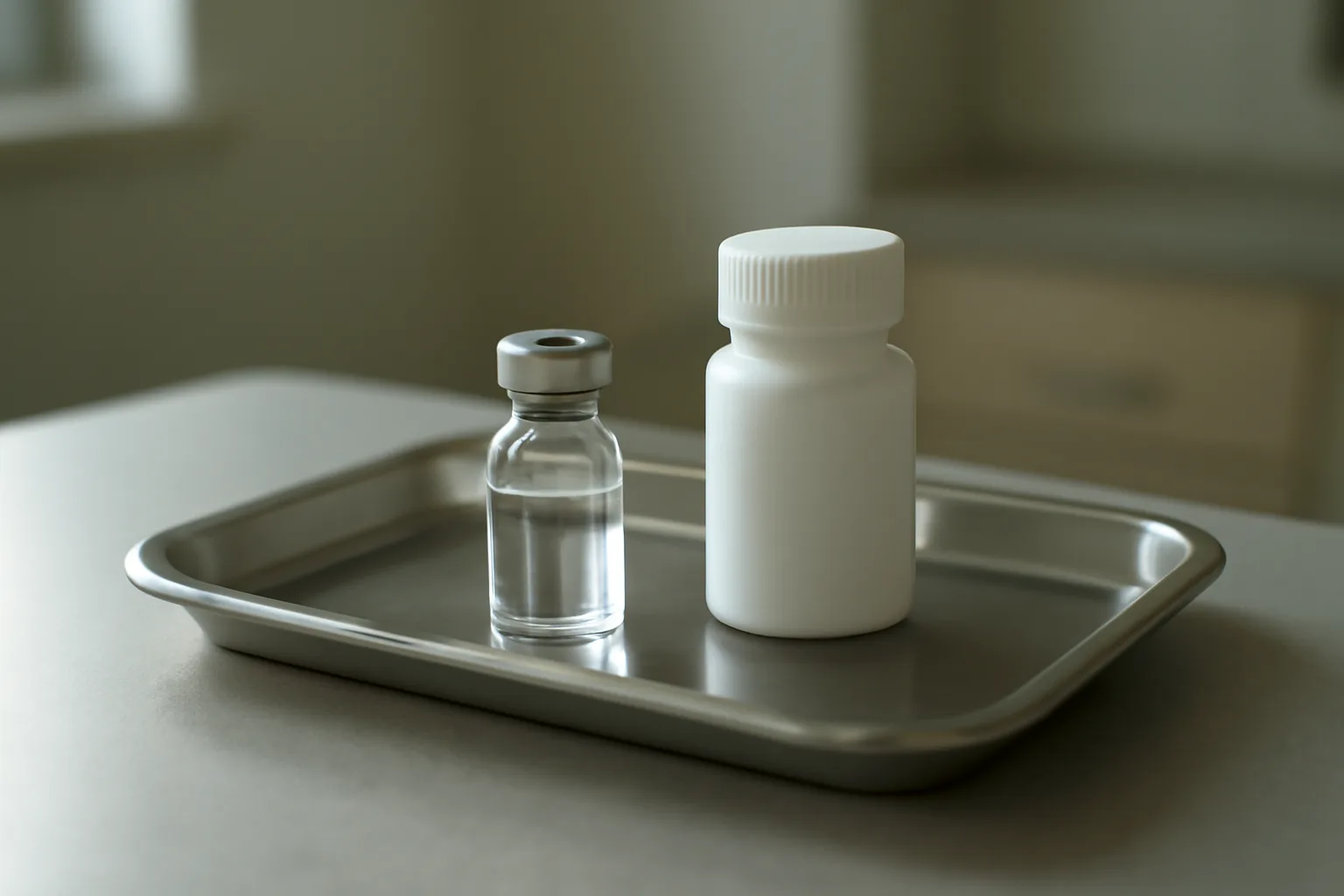
TL;DR
Almost all BPC-157 route comparisons come from rodent studies, not humans. Animal work suggests injectable (subcutaneous or local) BPC-157 has more consistent tissue-healing data, while oral BPC-157 was originally studied for gut protection. Human evidence is limited to small pilot studies using injections, not oral capsules.
What is BPC-157 and why does the route even matter?
BPC-157 is a synthetic peptide, 15 amino acids long, derived from a protective protein found in human gastric juice. It's been studied for decades in animal models for its effects on gut lining repair, tendon and ligament healing, and blood vessel formation [1][2]. The route question matters because a peptide's fate in the body depends heavily on how it gets in. Swallow it, and it has to survive stomach acid and enzymes before any of it reaches tissue. Inject it, and it bypasses the gut entirely, moving into local tissue or systemic circulation depending on where the needle goes. These are not small technical differences. They change what the peptide can plausibly do once it's in you. A 2025 literature and patent review in Pharmaceuticals looked across the BPC-157 research base and catalogued its proposed mechanisms and patent filings, but it did not resolve the oral-versus-injection question with human trial data [1]. That's the honest starting point for this whole topic: the science is still mostly upstream of people.
Is BPC-157 mostly studied as an oral compound or an injectable one?
Both, but for different reasons, and almost entirely in animals. The original interest in BPC-157 came from its gastric origin, which is why a lot of early rodent work tested oral or intragastric dosing for gut lining protection and ulcer healing. Later musculoskeletal research, tendon, ligament, muscle, and bone healing, has leaned much more heavily on injection, usually subcutaneous or intraperitoneal in rats. A Cell and Tissue Research paper from 2019 reviewing BPC-157's role in soft tissue healing describes the peptide accelerating healing of muscle, tendon, and ligament in animal injury models, work built almost entirely on injected administration in rodents [3]. Similarly, a foundational 2011 study in the Journal of Applied Physiology found that BPC-157 promoted tendon outgrowth, cell survival, and cell migration in an explant and rat model, again using non-oral routes [4]. So if you're asking which route has more musculoskeletal healing data behind it: injection, in animals, has the deeper track record. Oral dosing has more history in the gut-protection literature specifically. Neither has meaningful human dosing data for either indication.
Does oral BPC-157 survive digestion and actually get absorbed?
This is the single biggest unanswered question for anyone considering an oral product, and nobody has a clean human answer. BPC-157 is a peptide, and peptides are generally vulnerable to being broken down by stomach acid and digestive enzymes before they can be absorbed intact into the bloodstream. That's true of insulin, most growth factors, and most other therapeutic peptides, which is exactly why so many peptide drugs on the market are injectables rather than pills. The proposed "stability" of BPC-157 in gastric juice is part of what made it interesting to researchers in the first place, since it was isolated from a protective compound in gastric fluid. But being stable in gastric juice in a test tube or rodent stomach is not the same claim as being absorbed intact through the human gut wall in meaningful amounts. No published human pharmacokinetic study has established oral bioavailability for BPC-157 in people. This is the point where vendor marketing tends to get ahead of the science. If a product page tells you oral BPC-157 works as well as an injection, that claim isn't something the current literature supports. The honest answer is: we don't know, and the burden of proof sits with the seller, not the skeptic.
What does the animal research say about injectable BPC-157 for tendons, ligaments, and joints?
This is where the injectable literature is thickest, and it's still animal data. A 2018 review in Current Pharmaceutical Design compared BPC-157 to standard angiogenic growth factors and described its effects across tendon, ligament, muscle, and bone healing models, alongside gastrointestinal tract healing, again pointing to a consistent theme in rodent injury models of enhanced tissue repair and blood vessel growth [5]. A separate 2014 paper in the same journal specifically reviewed BPC-157's interaction with blood vessels, describing effects on angiogenesis in animal models that researchers believe underlie a lot of its proposed healing effects [6]. A 2025 systematic review in the HSS Journal (Hospital for Special Surgery) looked specifically at BPC-157's emerging use in orthopaedic sports medicine, again drawing on a literature base that is overwhelmingly preclinical, while noting the small amount of human data that does exist [7]. A 2025 narrative review in Current Reviews in Musculoskeletal Medicine, titled "Regeneration or Risk?", took a more cautious tone, weighing the same rodent tendon and ligament healing signal against open safety questions [8]. If you strip out the caveats: injected BPC-157, almost always subcutaneous or locally administered, in rats and mice, has a real and repeated signal for faster soft tissue repair markers. That is not the same as proven efficacy in a human knee or shoulder.
Is there any human data at all, and which route did it use?
Yes, a small amount, and it's injectable in every case we could find. A 2021 paper in Alternative Therapies in Health and Medicine reported on intra-articular (into-the-joint) injection of BPC-157 for patients with several types of knee pain, describing symptom changes in a small patient group [9]. This is a pilot-scale clinical report, not a large randomized controlled trial, and it should be read as an early signal rather than settled proof. A second human study, also in Alternative Therapies in Health and Medicine, published in 2024, looked at BPC-157 in patients with interstitial cystitis, a chronic bladder pain condition, again as a pilot study assessing symptom change [10]. Again, small numbers, early-stage design, injectable route. We found no published human clinical trial testing an oral BPC-157 product for any indication. That gap matters a lot if you're comparing routes: the entire (thin) human evidence base for BPC-157 so far is injection-based, not oral.
BPC-157 oral vs injection: side-by-side comparison
| Factor | Oral BPC-157 | Injectable BPC-157 | |
|---|---|---|---|
| Original research context | Gastric/gut lining protection in rodent models | Musculoskeletal healing (tendon, ligament, muscle, bone) in rodent models | |
| Human clinical data found | None located in published literature | Two small pilot studies: intra-articular knee injection [9], interstitial cystitis injection [10] | |
| Bioavailability in humans | Not established; peptide degradation in the gut is a known general concern | Bypasses digestive breakdown; absorption route depends on injection site | |
| Regulatory status | Not FDA-approved for any use; sold as unapproved compounded/research product | Not FDA-approved for any use; sold as unapproved compounded/research product | |
| Depth of animal literature | Moderate, concentrated on GI healing | Much larger, spans soft tissue, vascular, and orthopedic models [7][3][5][4] | This table reflects what's published, not a claim that one route is clinically superior for humans. Nobody has run oral and injectable BPC-157 head to head in a human trial, so any "oral works just as well" claim is unsupported marketing, not a research finding. |
Why do injectable peptides seem to get more attention from orthopedic researchers?
Recent orthopedic literature has taken BPC-157 more seriously as an adjunct injectable, alongside other peptides, largely because localized injection lets researchers target a specific tendon, ligament, or joint directly. A 2026 primer in The American Journal of Sports Medicine framed injectable peptide therapy, BPC-157 included, as an emerging area orthopedic and sports medicine physicians should understand, while stressing the preclinical nature of most supporting data [11]. A companion 2026 piece in the Journal of the American Academy of Orthopaedic Surgeons, Global Research & Reviews, reviewed therapeutic peptides in orthopedics broadly, again treating BPC-157 as investigational rather than established [12]. A 2025 review in Arthroscopy asked directly whether injectable therapeutic peptides are a real adjunct to regenerative medicine and sports performance, or getting ahead of the evidence, and landed on a cautious "more study needed" position [13]. That's a pattern across almost every recent review: injection is the route researchers are actually testing for musculoskeletal applications, but the reviews themselves keep flagging how thin the human data still is. Oral products don't show up in this orthopedic literature at all. Nobody has published orthopedic outcome data on an oral BPC-157 product.
What does the wound healing literature say, and does it favor either route?
A 2021 review in Frontiers in Pharmacology focused specifically on BPC-157 and wound healing, again drawing on animal models, and described consistent effects on wound healing processes including angiogenesis and tissue granulation [2]. Wound healing research on BPC-157 has used a mix of local, oral, and systemic administration in different rodent experiments, so this literature doesn't cleanly favor one route over the other. It does reinforce that most of what we know is still rodent skin and gut tissue, not human wounds. If you're looking at BPC-157 for gut-lining-related concerns specifically, the oral and gut-focused animal literature is somewhat more relevant conceptually, since gut exposure to an orally dosed peptide is direct rather than requiring systemic absorption first. But "more relevant conceptually" is not the same as "proven to work in humans by mouth," and no human trial has tested this.
What are the safety and legal differences between oral and injectable BPC-157?
Neither route is FDA-approved for any use. You won't find BPC-157 in the Drugs@FDA database of approved drug products [14], because it isn't one. That single fact should reset expectations regardless of which format a seller offers. BPC-157 also isn't on FDA's current list of bulk drug substances that compounding pharmacies may use under Section 503A [15], and it's not on the parallel 503B outsourcing facility bulks list either [16]. FDA has specifically nominated and reviewed BPC-157 for these lists and it has not been added, which is a meaningful regulatory signal, not a technicality. A compounded product built on a substance not cleared for that use sits in a legal gray zone regardless of whether it's a capsule or a vial. A 2026 review in Sports Medicine (Auckland) specifically assessed the safety and efficacy record of approved versus unapproved peptide therapies used for musculoskeletal injuries and athletic performance, and placed BPC-157 firmly in the unapproved category with a limited human safety record for any route [17]. That review is a useful reality check: "unapproved" isn't a marketing detail, it describes the actual regulatory and evidence status of the compound whether you're swallowing it or injecting it. On a practical note, injectable products carry their own separate risks: injection site infection, improper reconstitution, and dosing errors from home-mixed vials are real concerns that don't apply to oral capsules. That's a genuine safety trade-off in the other direction, and it's part of why sourcing through a licensed compounding pharmacy with provider oversight matters more for injectable products specifically.
If the research is mostly animal-based, why do people talk about human dosing for either route?
Because vendor marketing and forum culture have run well ahead of the actual clinical trial record. Animal studies report doses in micrograms per kilogram of body weight for rats and mice, figures that are not directly convertible to a safe or effective human dose, and no peer-reviewed source treats them that way. The two human pilot studies that exist, on intra-articular knee injection [9] and interstitial cystitis [10], used specific study protocols designed by the researchers running those small trials. Those aren't general dosing guidelines either, they're doses used in a specific pilot study on a specific small patient group. Anyone telling you a settled "standard human dose" exists for oral or injectable BPC-157, with real clinical backing, is overstating the record. What's true is that researchers are actively interested in this peptide, the mechanistic and animal story is genuinely rich, and the human trial record is still in its early, small-sample stage for injection and essentially nonexistent for oral.
So which route should someone researching BPC-157 actually pay attention to?
If you're trying to track the strongest available evidence, follow the injectable literature, since that's where the musculoskeletal and vascular research, and both small human pilot studies, actually sit [7][3][9][5][4][6][10]. If you're specifically interested in gut lining protection, the animal literature includes oral dosing, but there is no human trial confirming oral absorption or effect in people. Either way, this is research-stage territory, not an approved treatment with a settled dosing chart. Anyone buying BPC-157 in any form should treat sourcing quality and legal status as seriously as the science itself. Products dispensed through a state-licensed compounding pharmacy under provider review carry a materially different accountability structure than a peptide vial or capsule bought off a supplement website with no prescriber involved anywhere in the chain. BPC-157 Co works with a licensed compounding pharmacy partner to fill provider-reviewed orders rather than compounding anything in-house, which is the structure worth looking for regardless of which vendor you ultimately use. For readers comparing specific sellers, it's worth reviewing how BPC-157 is sold generally, what separates a legitimate BPC-157 brand from a sketchy one, and where to find a BPC-157 injection provider near you if you're leaning toward the injectable route that the research base actually supports more heavily.
Frequently asked questions
Is oral BPC-157 as effective as injectable BPC-157?
Nobody has published a human trial comparing the two routes directly, so there's no clinical answer. Peptides generally break down in stomach acid before reaching the bloodstream intact, which is why most peptide drugs are injectable. Animal literature on BPC-157 leans heavily toward injected administration for musculoskeletal healing outcomes specifically [2][3][5].
Does BPC-157 survive stomach acid when taken orally?
This isn't established in humans. BPC-157 was isolated from gastric juice, which is part of why it's been tested orally in rodent gut-healing models, but stability in a rodent stomach in a lab study is not proof of intact human intestinal absorption. No published human pharmacokinetic study confirms oral bioavailability.
What human studies actually exist for BPC-157?
Two small pilot studies were located: intra-articular injection for multiple types of knee pain (2021, Alternative Therapies in Health and Medicine) [4], and injection for interstitial cystitis symptoms (2024, same journal) [14]. Both are small, early-stage clinical reports, not large randomized trials, and both used injection, not oral dosing.
Is BPC-157 FDA approved as an oral supplement or injectable drug?
No. BPC-157 does not appear in the FDA's Drugs@FDA database of approved products [17], and it is not on FDA's current 503A or 503B bulk drug substance lists that govern legal compounding [15][16]. It is an unapproved substance regardless of whether it's sold as a capsule or an injectable vial.
Why is BPC-157 sold through compounding pharmacies if it isn't FDA approved?
Some compounding pharmacies fill prescriber-ordered peptide preparations under state pharmacy law and provider oversight, but FDA has specifically not added BPC-157 to its approved 503A or 503B bulk substance lists [15][16], which puts this practice in a legally uncertain position regardless of route.
What does the animal research say BPC-157 does for tendons and ligaments?
Rodent studies, mostly using injection, report BPC-157 promoting tendon outgrowth, cell survival, and cell migration (2011, Journal of Applied Physiology) [10], plus broader soft tissue healing effects across tendon, ligament, muscle, and bone models [3][5]. These are animal findings and have not been confirmed in controlled human trials.
Can BPC-157 help with gut or digestive issues if taken orally?
The original rodent research interest in BPC-157 came from gut lining protection studies, some using oral or intragastric dosing. But no published human trial has tested oral BPC-157 for gut health outcomes, so any claim of a confirmed human digestive benefit from an oral product is not supported by current literature.
Are there safety differences between oral and injectable BPC-157?
Injectables carry infection and dosing-error risks tied to injection technique and product sterility, which oral capsules don't. Neither route has a substantial human safety record; a 2026 Sports Medicine review classified BPC-157 among unapproved peptide therapies with limited safety data for either format [13].
How do injection sites affect BPC-157 in animal studies?
Rodent studies have used subcutaneous, intraperitoneal, and intra-articular (into-the-joint) injection depending on the healing target being studied, tendon versus gut versus joint. One human pilot study specifically used intra-articular injection for knee pain [4]. Site choice in animal work doesn't translate into a human dosing protocol.
Is there a standard human dose for oral or injectable BPC-157?
No settled standard dose exists in peer-reviewed literature for either route. Animal studies use micrograms-per-kilogram doses that don't convert directly to human use, and the two human pilot studies used protocols specific to those small trials, not general dosing guidelines [4][14].
Why do orthopedic researchers focus more on injectable peptides than oral ones?
Recent orthopedic reviews frame injectable peptide therapy, BPC-157 included, as an emerging adjunct worth physician awareness, largely because injection allows targeting a specific joint or tendon directly [8][9][11]. Oral BPC-157 products have no comparable orthopedic outcome literature published.
Should I trust a vendor that claims oral BPC-157 works as well as injections?
Be skeptical. No published human trial has tested an oral BPC-157 product for any indication. Claims of equivalent oral efficacy are not supported by the current research record, which consists of animal studies plus two small human pilot studies, both using injection [4][14].
Sources
- Pharmaceuticals (Basel), 2025 (PMID 40005999): Literature and patent review cataloguing BPC-157's proposed mechanisms and patent filings across preclinical research
- HSS Journal, 2025 (PMID 40756949): Systematic review of BPC-157's emerging use in orthopaedic sports medicine, noting the small human data set alongside a largely preclinical literature base
- Cell and Tissue Research, 2019 (PMID 30915550): Review describing BPC-157 accelerating musculoskeletal soft tissue healing (muscle, tendon, ligament) in animal injury models
- Alternative Therapies in Health and Medicine, 2021 (PMID 34324435): Small human pilot study on intra-articular BPC-157 injection for multiple types of knee pain
- Current Pharmaceutical Design, 2018 (PMID 29998800): Review comparing BPC-157 to angiogenic growth factors across GI, tendon, ligament, muscle, and bone healing in animal models
- Frontiers in Pharmacology, 2021 (PMID 34267654): Review of BPC-157 and wound healing mechanisms including angiogenesis, based on animal models
- Current Reviews in Musculoskeletal Medicine, 2025 (PMID 40789979): Narrative review weighing musculoskeletal healing signal against safety questions for BPC-157
- JAAOS Global Research & Reviews, 2026 (PMID 41490200): Review of therapeutic peptides in orthopedics treating BPC-157 as investigational rather than established
- American Journal of Sports Medicine, 2026 (PMID 41476424): Primer for orthopedic and sports medicine physicians on injectable peptide therapy including BPC-157, stressing preclinical evidence base
- Journal of Applied Physiology, 2011 (PMID 21030672): Study finding BPC-157 promoted tendon outgrowth, cell survival, and cell migration in explant and rat models
- Arthroscopy, 2025 (PMID 39265666): Review questioning whether injectable therapeutic peptides are a proven adjunct to regenerative medicine given current evidence
- Current Pharmaceutical Design, 2014 (PMID 23782145): Review of BPC-157's effects on blood vessels and angiogenesis in animal models
- Sports Medicine (Auckland), 2026 (PMID 41966639): Review classifying BPC-157 among unapproved peptide therapies with limited human safety data
- Alternative Therapies in Health and Medicine, 2024 (PMID 39325560): Small human pilot study on BPC-157 injection for interstitial cystitis symptoms
- FDA, Bulk Drug Substances Used in Compounding Under Section 503A: BPC-157 is not on FDA's current list of bulk substances approved for 503A compounding
- eCFR, 21 CFR 216.24, the 503B Bulks List: Regulatory list governing bulk substances usable by 503B outsourcing facilities, which does not include BPC-157
- Drugs@FDA, FDA-approved drug products database: BPC-157 does not appear as an FDA-approved drug product in any form