Last updated 2026-07-24
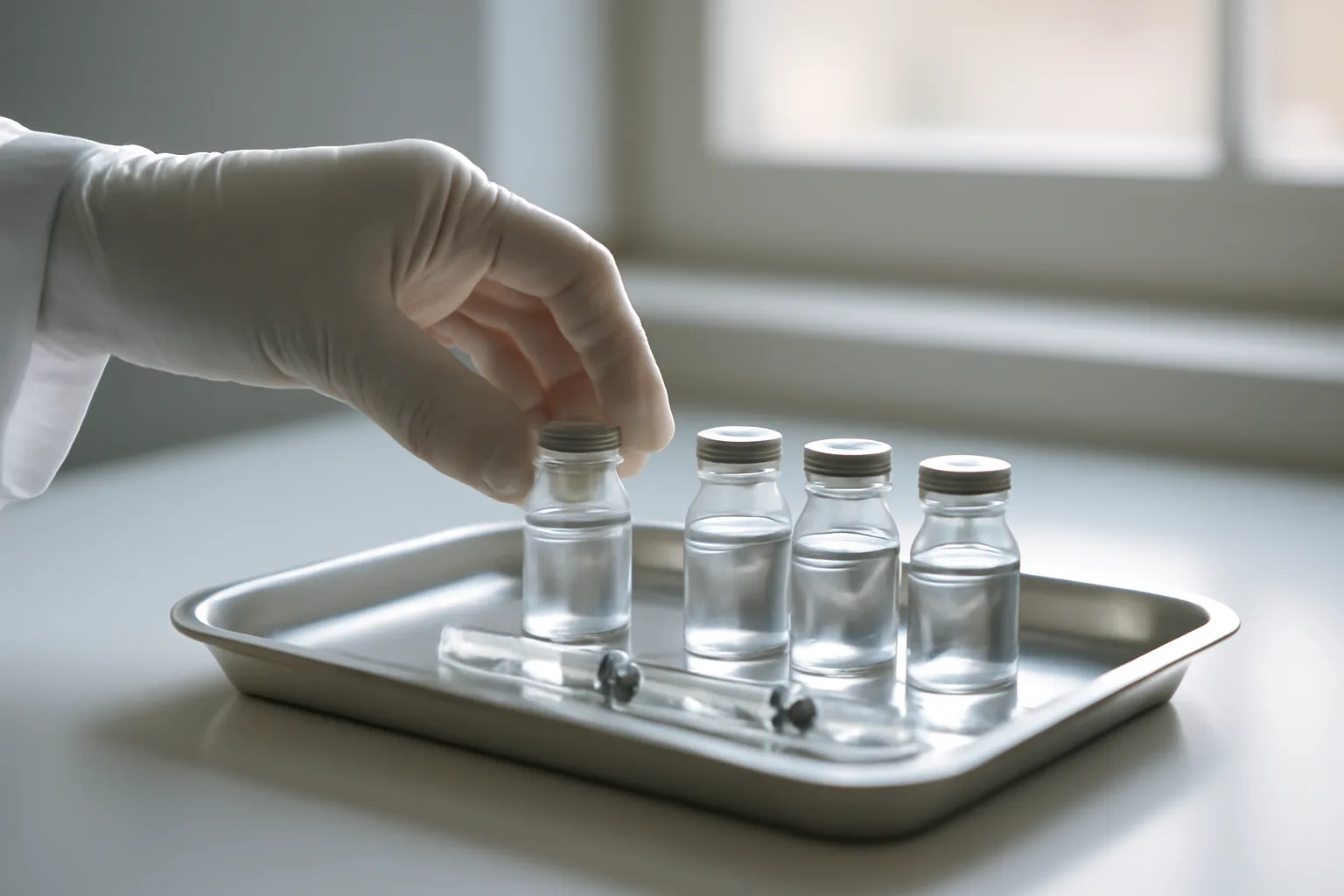
TL;DR
There's no single 'best' BPC-157 product because the compound itself isn't FDA-approved and almost all supporting research is preclinical, done in rats and mice. A handful of small human studies exist (one knee pain trial, one interstitial cystitis pilot), but nothing settles dosing or efficacy in people. Buying decisions should hinge on sourcing and pharmacy oversight, not marketing claims of being 'the best.'
Is there actually a 'best' BPC-157 peptide, or is that a marketing phrase?
Honestly, 'best BPC-157 peptide' is mostly a search phrase, not a scientific category. BPC-157 (body protection compound-157) is a single synthetic peptide sequence, not a product line with meaningfully different formulations the way, say, protein powders vary. When vendors claim theirs is 'the best,' they're usually talking about purity testing, third-party lab reports, or dose concentration, not a different molecule with better data behind it. The honest starting point: BPC-157 is not an FDA-approved drug. Search Drugs@FDA and you won't find it listed [1]. That matters for the 'best' question because there's no approved reference product to compare against, no standardized manufacturing spec, and no FDA-reviewed labeling. Anyone claiming their BPC-157 is clinically superior is making a claim the agency hasn't evaluated. What you can actually compare: whether a product comes from a licensed pharmacy operating under the compounding rules in 21 U.S.C. § 353a [2], whether it's tested for purity and sterility, and whether a prescriber is reviewing your case before you inject anything. Those are real differentiators. 'Best peptide' as a chemistry claim mostly isn't.
What does the actual BPC-157 research record look like?
The research base is large in volume but narrow in kind: it's overwhelmingly rodent and cell-culture work. A 2025 literature and patent review in Pharmaceuticals catalogs BPC-157's proposed mechanisms across tissue types and notes ongoing patent activity around its use, which tells you industry interest is real even where clinical proof isn't [3]. A 2025 systematic review in the HSS Journal (Hospital for Special Surgery) looked specifically at orthopaedic sports medicine applications of BPC-157 and found the evidence base still leans heavily preclinical, with human data limited and early [4]. A 2019 review in Cell and Tissue Research described BPC-157's role in accelerating musculoskeletal soft tissue healing in animal and tissue models, covering tendon, ligament, and muscle repair mechanisms [5]. None of this is a human clinical trial proving the drug works for your torn tendon. A 2025 narrative review titled 'Regeneration or Risk?' in Current Reviews in Musculoskeletal Medicine is worth reading in full if you're deciding whether to try this compound: it weighs the regenerative claims against the real gaps in safety and efficacy data [6]. That's the tone the whole field deserves right now: interested, not settled.
Has BPC-157 actually been tested in humans?
Yes, in a small way, twice in the studies available here. A 2021 study in Alternative Therapies in Health and Medicine looked at intra-articular BPC-157 injection for multiple types of knee pain [7]. It's a real human study, but readers should know the study size and design limits how far the results generalize; this is not a large randomized trial and shouldn't be read as proof the injection works for knee pain broadly. Separately, a 2024 pilot study, also in Alternative Therapies in Health and Medicine, tested BPC-157 on symptoms in patients with interstitial cystitis [8]. Again: a pilot study. Pilot means small, exploratory, and meant to justify a bigger trial, not to stand in for one. That's the entire human clinical picture behind the ingredient right now: two small, early studies in narrow conditions. Everything else, the tendon papers, the wound-healing papers, the angiogenesis papers, is animal or cell-based. If a seller implies otherwise, that's a red flag, not a selling point.
What do the animal studies actually show, and why can't I use their doses?
Animal research on BPC-157 covers a lot of ground. A 2011 study in the Journal of Applied Physiology found BPC-157 promoted tendon healing in a rat model through outgrowth from tendon explants, cell survival, and cell migration [9]. A 2018 review in Current Pharmaceutical Design compared BPC-157 to standard angiogenic growth factors and discussed its role across gastrointestinal, tendon, ligament, muscle, and bone healing models [10]. A 2014 paper, also in Current Pharmaceutical Design, focused specifically on BPC-157's relationship to blood vessel formation [11]. A 2021 review in Frontiers in Pharmacology covered BPC-157 and wound healing mechanisms more broadly [12]. Here's the part that matters for anyone shopping for 'the best' product: every dose figure in those papers is a rodent or in-vitro dose. Rats are not small humans. Dosing in animal studies is calculated by body weight and species-specific metabolism, and there is no validated conversion that turns a rat µg/kg dose into a safe or effective human dose. Any vendor or forum post handing you a 'human equivalent dose' derived from these papers is doing math the researchers themselves never validated for people. If you want dosing information you can actually trust, that conversation belongs with a prescriber working through a licensed pharmacy, not a spreadsheet built from a rat study.
Where does BPC-157 legally stand right now?
This is the piece a lot of sellers gloss over. BPC-157 is not on the FDA's 503A bulk drug substances list, the list that determines what a compounding pharmacy can legally use to prepare patient-specific prescriptions under 21 CFR 216.23 [13]. It's also absent from the 503B bulks list under 21 CFR 216.24, which governs outsourcing facilities [14]. In fact, FDA has specifically nominated BPC-157 for review and flagged safety concerns in its bulk drug substances docket, and the substance appears on FDA's list of bulk drug substances nominated for use in compounding, which is a different thing from being approved for that use [15]. Compounding pharmacies operate under 21 U.S.C. § 353a, which sets conditions for valid prescriptions, licensed pharmacist or physician compounding, and substances that meet USP-NF standards or appear on FDA's approved bulks lists [2]. BPC-157 not being on those lists is a meaningful legal constraint, not a technicality. Practically, this means the regulatory ground under BPC-157 access has shifted and could keep shifting. Anyone buying it should check current FDA guidance on bulk drug substances used in compounding [16] rather than relying on a vendor's claim that everything is fine.
What does the newer clinical and orthopaedic literature say about using BPC-157 in practice?
Several 2025 and 2026 papers try to bridge the gap between lab interest and clinical reality, and they're worth knowing about even though none of them report new large trials. A 2026 review in the Journal of the American Academy of Orthopaedic Surgeons: Global Research & Reviews covers therapeutic peptides in orthopaedics generally, including BPC-157, and frames the field's applications, challenges, and open questions [17]. A 2026 paper in the American Journal of Sports Medicine, framed as a primer for orthopaedic and sports medicine physicians on injectable peptide therapy, is aimed at clinicians trying to counsel patients who are already asking about this [18]. A 2025 paper in Arthroscopy asks directly whether injectable therapeutic peptides are a real adjunct to regenerative medicine and sports performance, or getting ahead of the evidence [19]. Most directly relevant to the 'best peptide' shopping question: a 2026 paper in Sports Medicine (Auckland) reviews safety and efficacy across approved and unapproved peptide therapies used for musculoskeletal injuries and athletic performance, putting BPC-157 in context against other peptides people are buying for similar reasons [20]. The consistent theme across all five of these newer papers: interest from sports medicine and orthopaedic clinicians is rising faster than the human trial data is.
How should I actually evaluate a BPC-157 seller?
Skip 'best' as a search term and ask these instead: Does a licensed prescriber review your case before dispensing? Under 21 U.S.C. § 353a, valid compounding requires a valid patient-specific prescription [2]. If a site sells vials with no medical review, that's not a compounding pharmacy operating within the rules; it's something else, and the quality assurance behind it is unknown. Where does the product get compounded? A named, licensed compounding pharmacy is a real answer. 'Our lab' or no answer at all is not. Is there third-party purity and identity testing, and will they show you the certificate of analysis for your specific lot? Concentration claims (mg per vial) mean nothing without testing to confirm what's actually in the vial. What does the site say BPC-157 does? If the marketing reads like settled clinical fact ("heals your tendon in weeks") rather than "early rodent research suggests," that's a sign the seller is more interested in the sale than the science. Best BPC-157 peptides and best brand BPC-157 both cover how to size up sourcing claims in more detail if you want to compare specific vendors side by side.
How is BPC-157 typically dispensed if a provider does prescribe it?
Where BPC-157 is available through the provider-reviewed route, it's dispensed as an injectable through a licensed compounding pharmacy, following a prescriber's review of the patient's history and goals. That's a fundamentally different transaction than buying a vial online with no medical oversight. BPC-157 Co works with a licensed compounding pharmacy partner to fulfill provider-reviewed orders; BPC-157 Co itself does not compound anything. That distinction matters because compounding, testing, and dispensing are pharmacy functions governed by state pharmacy law and the federal framework in 21 U.S.C. § 353a [2], not something a peptide retailer can do in-house without a pharmacy license. If you're comparing where to source a provider-reviewed product versus an unregulated online vial, that's the real fork in the road, more than comparing brand names for 'the best' peptide. BPC-157 for sale and BPC-157 peptide injection near me go into how the prescriber-reviewed pathway works and how to find it locally.
What are the real risks and unknowns I should weigh before buying anything?
Set the marketing aside for a second. The honest risk list looks like this: Safety data in humans is thin. The knee pain study [7] and interstitial cystitis pilot [8] are small studies in specific conditions; they were not designed to catch rare adverse events, drug interactions, or long-term risks the way a Phase 3 trial would be. Manufacturing quality varies enormously across unregulated online sellers, and BPC-157's absence from the FDA 503A and 503B bulks lists [13][14] means there's no standardized manufacturing pathway you can point to and say 'this meets the same bar as an approved drug.' The 2025 'Regeneration or Risk?' review frames this tension directly: real regenerative signal in preclinical models, genuine uncertainty about risk and mechanism translation to humans [6]. That's not fence-sitting for its own sake; it's an accurate description of where the science actually sits in 2025 and 2026. If you decide to move forward anyway, doing it through a licensed pharmacy with prescriber review at least puts a medical professional between you and the decision, which is not nothing.
Bottom line: what should I actually do?
Don't buy on the basis of 'best BPC-157 peptide' marketing language; there's no approved reference product and no large human trial to rank vendors against. Do treat sourcing, testing, and prescriber oversight as the real decision points. Do read the actual research, most of which is rodent and cell-based, and treat the two small human pilot studies [7][8] as early signals, not proof. And do check current FDA guidance on bulk drug substances before assuming anything about legal status is settled, because it's an evolving list [15][16]. If you're comparing specific sourcing options next, best BPC-157 peptide on the market and best brands for BPC-157 walk through vendor-level comparisons using the same sourcing criteria covered here.
Frequently asked questions
What is the best BPC-157 peptide brand to buy?
There's no clinically validated 'best brand' because BPC-157 isn't FDA-approved and has no standardized reference formulation. The meaningful comparison is sourcing quality: whether a licensed compounding pharmacy prepares it under prescriber review, with third-party purity testing, versus an unregulated online seller with no medical oversight.
Is BPC-157 FDA approved?
No. Drugs@FDA, the FDA's approved drug database, has no BPC-157 listing [1]. It also doesn't appear on the FDA's 503A or 503B bulk drug substance lists that govern what compounding pharmacies can legally use [13][14], and FDA has flagged it in its bulk substance nomination review [15].
Has BPC-157 been tested in human clinical trials?
Only in small, early studies. A 2021 study tested intra-articular BPC-157 injection for knee pain [7], and a 2024 pilot study tested it in interstitial cystitis patients [8]. Both are small and early stage. There is no large randomized controlled trial establishing efficacy in humans for any indication.
Why do BPC-157 sellers cite rat studies for dosing?
Most of the published research on BPC-157 is preclinical, done in rats and mice, with doses calculated for rodent body weight and metabolism [9][10][11][12]. There's no validated formula converting those doses into human equivalents, so any 'human dose' derived from animal papers is an unverified extrapolation, not established dosing science.
Can I legally buy BPC-157 online without a prescription?
Legally, compounded BPC-157 is supposed to be dispensed under a valid patient-specific prescription per 21 U.S.C. § 353a [2], and the substance isn't on FDA's approved compounding bulks lists [13][14]. Vials sold online with no prescriber review fall outside that framework, which raises both legal and quality-control questions.
Does BPC-157 help tendon and ligament healing?
In rodent and cell-culture models, yes: a 2011 study found it promoted tendon healing through cell migration, survival, and outgrowth in rats [9], and later reviews cover similar mechanisms in ligament, muscle, and bone models [5][10]. No large human trial has confirmed this effect in people.
Does BPC-157 work for knee pain in humans?
One small 2021 study in Alternative Therapies in Health and Medicine looked at intra-articular BPC-157 injection across several types of knee pain [7]. It's real human data, but it's a small study, not a large trial, so it can't establish efficacy broadly. Ask a prescriber to walk you through the actual study design before assuming it applies to your case.
What does 'provider-reviewed' BPC-157 mean?
It means a licensed prescriber evaluates your history and goals before a licensed compounding pharmacy prepares and dispenses the peptide, consistent with the prescription requirement in 21 U.S.C. § 353a [2]. It's the opposite of buying an unreviewed vial from an online retailer with no medical oversight.
Is BPC-157 safe?
Nobody has good long-term human safety data; the two available human studies are small and early [7][8]. Preclinical research describes wound-healing and angiogenic mechanisms [12][11], but rodent safety data doesn't reliably predict human risk. A 2025 review frames this directly as an open regeneration-versus-risk question [6].
How is BPC-157 used in orthopaedic and sports medicine right now?
Clinician-facing 2025 and 2026 papers describe rising interest in orthopaedic and sports medicine settings [4][17][18][19], alongside acknowledgment that human trial evidence lags behind that interest. A 2026 Sports Medicine review specifically compares BPC-157's safety and efficacy record against other peptides used for similar purposes [20].
What's the difference between 503A and 503B compounding, and why does it matter for BPC-157?
503A covers pharmacy compounding for individual patient prescriptions (21 CFR 216.23) [13]; 503B covers larger outsourcing facilities (21 CFR 216.24) [14]. BPC-157 isn't on either FDA bulks list, which is a real regulatory constraint on how it can legally be compounded and dispensed right now [15].
Are there other peptides similar to BPC-157 worth comparing?
Clinical reviews increasingly discuss BPC-157 alongside other injectable peptides used off-label for musculoskeletal and sports recovery goals [18][19][20]. None of these have large-scale human approval either; the comparison worth making is sourcing and prescriber oversight, not brand marketing.
Sources
- FDA, Drugs@FDA approved drug products database: BPC-157 does not appear as an FDA-approved drug in the Drugs@FDA database
- 21 U.S.C. § 353a, pharmacy compounding (Cornell Law): Federal law requires a valid patient-specific prescription and licensed pharmacist/physician compounding for substances like BPC-157
- Pharmaceuticals (Basel), 2025, PMID 40005999: 2025 literature and patent review catalogs proposed mechanisms and patent activity around BPC-157
- HSS Journal, 2025, PMID 40756949: Systematic review finds BPC-157 evidence in orthopaedic sports medicine remains largely preclinical with limited human data
- Cell and Tissue Research, 2019, PMID 30915550: Review describes BPC-157's role in accelerating musculoskeletal soft tissue healing in animal/tissue models
- Current Reviews in Musculoskeletal Medicine, 2025, PMID 40789979: Narrative review weighs regenerative potential of BPC-157 against unresolved safety and efficacy questions
- Alternative Therapies in Health and Medicine, 2021, PMID 34324435: Small human study of intra-articular BPC-157 injection for multiple types of knee pain
- Alternative Therapies in Health and Medicine, 2024, PMID 39325560: Pilot study testing BPC-157 effect on symptoms in interstitial cystitis patients
- Journal of Applied Physiology, 2011, PMID 21030672: Rat/explant study found BPC-157 promoted tendon healing via cell outgrowth, survival, and migration
- Current Pharmaceutical Design, 2018, PMID 29998800: Review compares BPC-157 to angiogenic growth factors across GI, tendon, ligament, muscle, and bone healing models
- Current Pharmaceutical Design, 2014, PMID 23782145: Paper examines BPC-157's relationship to blood vessel formation in preclinical models
- Frontiers in Pharmacology, 2021, PMID 34267654: Review covers BPC-157 mechanisms in wound healing
- 21 CFR 216.23, the 503A Bulks List (eCFR): BPC-157 is not on the FDA's 503A bulk drug substances list for pharmacy compounding
- 21 CFR 216.24, the 503B Bulks List (eCFR): BPC-157 is not on the FDA's 503B bulk drug substances list for outsourcing facilities
- FDA, bulk drug substances nominated for use in compounding (current list): BPC-157 appears on FDA's nominated bulk drug substances list, distinct from being approved for compounding use
- FDA, bulk drug substances used in compounding under section 503A: FDA guidance page describing the evolving process for evaluating bulk drug substances for compounding
- JAAOS Global Research & Reviews, 2026, PMID 41490200: 2026 review covers therapeutic peptides in orthopaedics including applications and challenges
- American Journal of Sports Medicine, 2026, PMID 41476424: 2026 primer for orthopaedic and sports medicine physicians on injectable peptide therapy
- Arthroscopy, 2025, PMID 39265666: 2025 paper questions whether injectable therapeutic peptides are a validated adjunct to regenerative medicine and sports performance
- Sports Medicine (Auckland), 2026, PMID 41966639: 2026 review compares safety and efficacy of approved and unapproved peptide therapies for musculoskeletal injury and athletic performance